

MKB Juristen drafts custom legal documents
It is best not to cobble together or copy important contracts, terms and conditions, and other legal documents yourself. We help entrepreneurs on a budget with customized legal solutions, clear costs upfront, and practical explanations.
- Custom contracts, terms and conditions, and legal documents
- Budget-friendly and clear about the costs upfront
- Request a free consultation or a no-obligation quote
You calculate turnover tax (VAT) on the supplies and services you provide. You file a return monthly, quarterly, or annually — depending on turnover — no later than the last day of the month following the period. 2024 rates: 21% standard, 9% reduced, 0% exempt. Small business owners with a turnover of less than €20,000 can opt for the KOR (VAT-free but no deduction). Below: how the return works, what needs to be included, and how Karim's start-up operating company reclaims VAT in its first year.
The short answer
- Filing frequency: monthly, quarterly or annually — Tax and Customs Administration determines based on turnover.
- Rates 2024: 21% standard, 9% reduced, 0% exempt.
- Deadline: last day of the month after the period (May 1 for Q1).
- Small Business Scheme (KOR): turnover < € 20,000 → opt for VAT exemption.
- VAT number: you receive this upon registration with the Chamber of Commerce — listed on the website (NL000000000B01 format).
Who is liable for VAT?

Almost every entrepreneur in the Netherlands is subject to VAT (Art. 7 VAT Act). Exceptions:
- Education and care: exempted under conditions.
- Financial services: exempt.
- Some sporting and cultural activities.
- Small Business Scheme (KOR) — choice for exemption.
Being liable for VAT means: calculating, collecting, and remitting to the Tax and Customs Administration. But also: reclaiming VAT on purchases (input tax).
Rates 2024
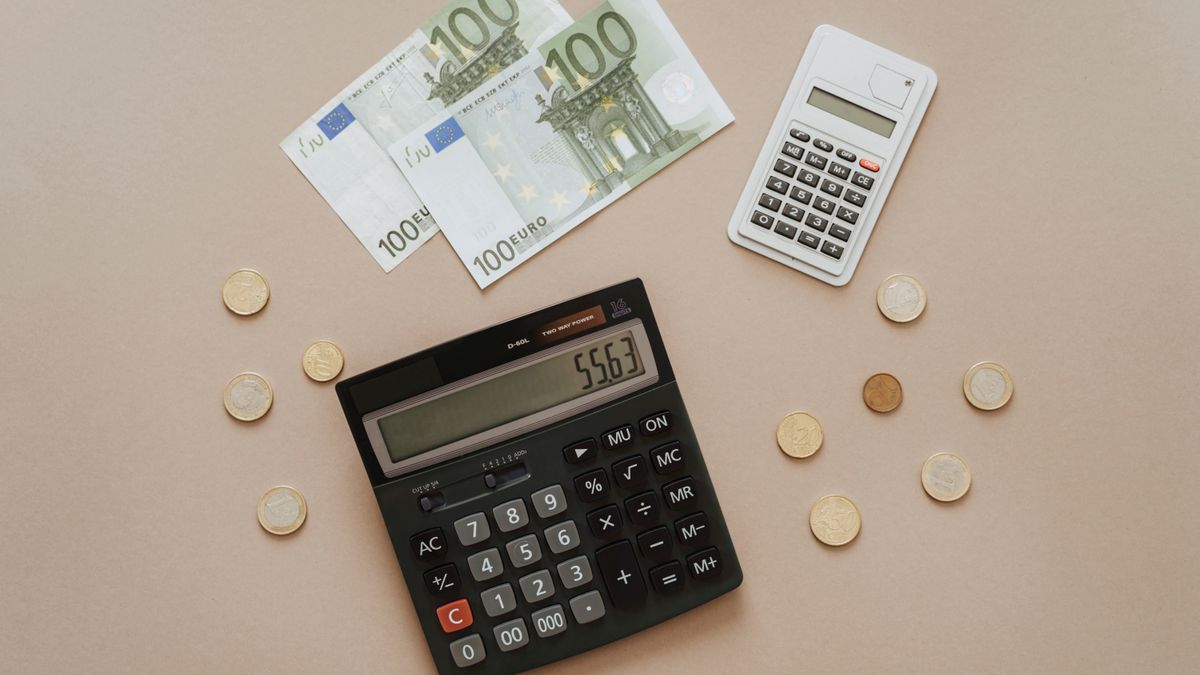
- 21% (standard rate): most supplies and services — computers, advice, software, clothing.
- 9% (reduced rate): food, books, public transport, hairdressers, bicycle repair shops, restaurants.
- 0% (exempt): exports outside the EU, intra-Community supplies, certain international services.
- Excluding VAT: education, healthcare, financial services — no VAT, no input tax deduction.
Karim's software agency charges 21% on its services — the standard rate for IT work.
Reporting frequency
The Tax and Customs Administration determines frequency based on estimated turnover:
- Monthly: for large VAT flows (turnover > €7,000,000 or many shifts).
- Quarterly: most common for SMEs.
- Annually: for very low turnover — exception, upon request.
Deadline: no later than the last day of the month following the period. For Q1: May 1. For January: February 28. Late: default penalty + interest.
How do you file a VAT return?
Via Mijn Belastingdienst Zakelijk or your accounting package (direct connection). Content:
- Turnover 21%: turnover excl. VAT + VAT due.
- Turnover 9%: same for 9% rate.
- Turnover 0%: exports, intra-Community supplies.
- Input tax: VAT on purchases, costs, investments — reclaimable.
- Balance: payable to the Tax and Customs Administration, or to be received back.
- Other sections: intra-Community services, VAT outside the EU.
In case of positive balance (VAT due): pay. In case of negative balance (VAT refund): receive back into account.
The Small Business Scheme (KOR)
For entrepreneurs with a turnover of less than €20,000 per calendar year:
- Opt voluntarily for KOR — no VAT on invoices, no tax return.
- Disadvantage: no deduction of VAT on purchases (input tax).
- Valid for 3 years, with possible renewal thereafter.
- Register via the Tax and Customs Administration — before the start of the calendar year.
Smart for freelancers with private clients or exempt services (healthcare, education). Less advantageous for B2B work — input tax weighs heavily.
VAT number and invoices
Every VAT-registered entity receives a VAT number (NL000000000B01 format) upon registration with the Chamber of Commerce. Mandatory on:
- Invoices to customers.
- Website (for webshops).
- Letterhead and business cards (recommended).
International VAT check: for intra-community supplies, check the recipient's VAT number via VIES (EU system).
reclaim input tax
VAT is deductible on business purchases (provided they are for taxable transactions):
- Computers, software, office supplies — fully deductible.
- Company car — 50% VAT deduction for private use, except for electric cars.
- Food and drink (representation) — 21% but 73.5% deductible in income tax/corporate tax.
- Investments in property — reviewed over 10 years (VAT revision period).
Karim's start-up operating company invests €50,000 in computers and software → €10,500 VAT back in first VAT return. Liquidity advantage without comparison.
Honest recommendation
VAT returns are largely routine work using good accounting software (Moneybird, Exact, Yuki) — integration with the Tax and Customs Administration makes it simple. For start-up entrepreneurs: make a conscious choice between the Small Business Scheme (KOR) and regular VAT. For B2B work and investments: regular VAT is almost always more advantageous (input tax). For international deliveries: be careful regarding intra-community rules, otherwise corrections will be required afterwards. A good bookkeeper costs €75 – €150 per quarter — well worth the money.
For other topics: which taxes does a BV pay, corporate income tax return and VAT fiscal unity.
Frequently Asked Questions
The Tax and Customs Administration determines this based on turnover: monthly (large VAT flows), quarterly (most common for SMEs), or annually (very small turnover). The return must be filed no later than the last day of the month following the period.
2024: 21% standard (most services and products), 9% reduced (food, books, restaurants, hairdressers), 0% exempt (exports, intra-Community supplies). Education, healthcare, and financial services are exempt from VAT.
Small Business Scheme: with an annual turnover of less than €20,000, you can opt for VAT exemption. No VAT on invoices, no tax return to file, but also no input VAT deduction. Valid for 3 years; primarily for B2C and small self-employed professionals.
VAT on business purchases is deductible in the return — booked under “input VAT”. Required: invoice with supplier's VAT number and proof of business use. In case of a negative balance (more deduction than due): refund to account.
Name and address of both parties, VAT numbers, invoice number, date, delivery date, description of service, amount excl. VAT, VAT amount per rate, total incl. VAT. Mandatory for B2B, also useful for B2C.
Default penalty of €67 (first time) to €137 (recurring offenses), plus tax interest (4% in 2024) on VAT paid late. In case of intent or misdemeanors: higher penalty. Late: declare and pay immediately.
Export outside the EU: 0% rate, no VAT on invoice. Intra-Community supply (EU company with a valid VAT number): 0% rate, invoice with reverse charge / VAT reverse charge. Non-EU consumers: 21% Dutch VAT.




