

MKB Juristen drafts custom legal documents
It is best not to cobble together or copy important contracts, terms and conditions, and other legal documents yourself. We help entrepreneurs on a budget with customized legal solutions, clear costs upfront, and practical explanations.
- Custom contracts, terms and conditions, and legal documents
- Budget-friendly and clear about the costs upfront
- Request a free consultation or a no-obligation quote
Establishing a foundation with a non-Dutch-speaking founder is possible in the Netherlands — the founder does not need to speak Dutch. However, a sworn interpreter is required for the signing of the deed if the founder has insufficient command of the Dutch language. The notarial deed itself is in Dutch, optionally accompanied by a (notarially supervised) translation. Processing time: typically one to three weeks longer than a standard process, and costs increase by an additional €200 – €600 for the interpreter and translation.
The short answer
- Allowed: yes, non-Dutch-speaking founders can establish a Dutch foundation.
- Interpreter required: in case of insufficient Dutch proficiency, a sworn interpreter is required when passing.
- Deed in Dutch: the official deed is always in Dutch.
- Translation: possibly a notarial translation if the founder wants a legible copy.
- Identification: via valid passport or EU ID; sometimes additional requirements for non-EU citizens.
When is an interpreter mandatory?
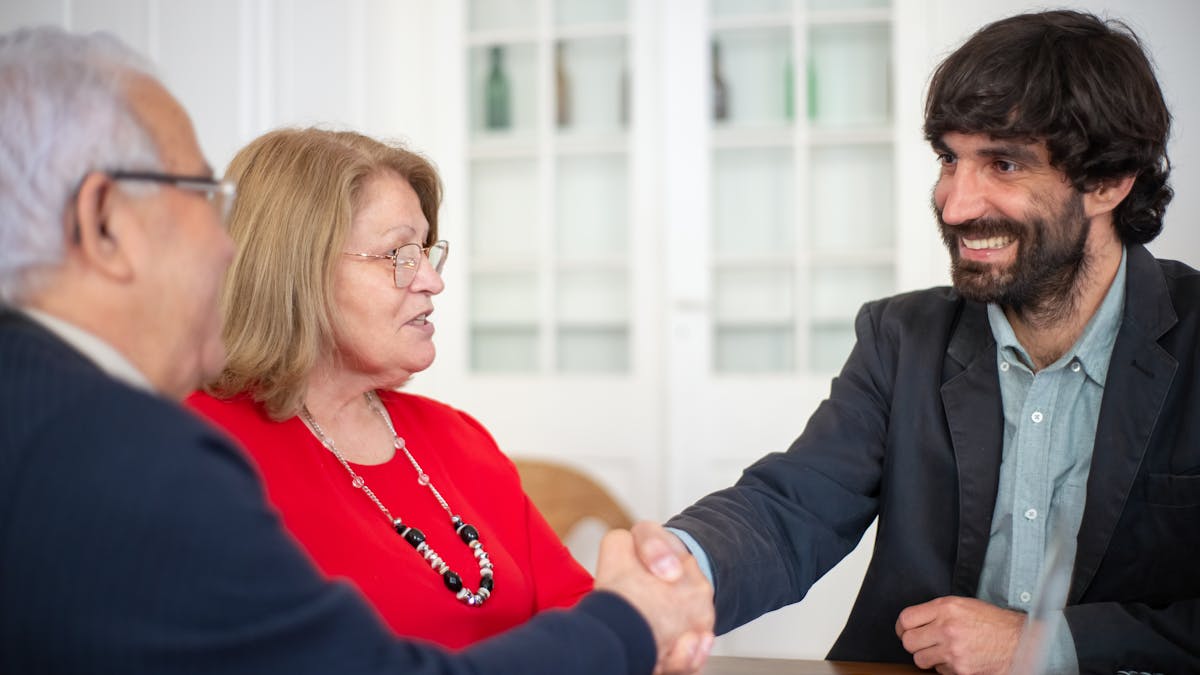
The notary determines whether an interpreter is required. Rules of thumb:
- Does the founder fully understand the Dutch deed? No interpreter needed.
- Does the notary have doubts about the language proficiency? Sworn interpreter required.
- Does the founder speak English, and does the notary too? A bilingual session is possible, but the official deed remains in Dutch.
- Does the notary work with digital identification? Sometimes a written translation is sufficient.
Sworn interpreters work in accordance with the Sworn Interpreters and Translators Act (Wbtv). They are registered in the Rbtv register and provide the legal guarantee that the translation is correct.
Which translation?
Three options:
- Oral translation during signing: the interpreter translates the entire deed live for the founder. Cheapest route.
- Pre-written translation: a sworn translator produces a translated version that the founder can read at their leisure. More expensive, but more thorough.
- Bilingual deed: very rare; only in cases of high complexity and international aspects.
For most situations, an oral translation during passing plus a written summary suffices.
Identification for non-EU founders
Under the Wwft, the notary must identify the founder:
- EU citizens: a valid passport or EU ID card is sufficient.
- Non-EU citizens: valid passport. Sometimes additionally: apostille or legalisation of documents from the home country. In complex cases, a statement from the embassy.
- Residence document: for non-EU citizens residing in the Netherlands, the residence document may be requested.
A notary working with international clients can best advise on the specific rules regarding identification and international incorporation.
Costs and lead time
- Basic setup: €350 – €800 (online) to €1,200 (in-person).
- Sworn interpreter: €100 – €200 per hour, often a two-hour minimum.
- Sworn translator (written): €0.15 – €0.30 per word. A document of 3,000 words: €450 – €900.
- Apostille or legalisation for non-EU documents: €25 – €200 per document.
- Lead time: 2 – 4 weeks for the entire process.
Honest recommendation
Establishing a foundation with a non-Dutch-speaking founder is technically possible but requires extra preparation. Choose a notary with international experience, schedule extra time for interpreting and translation services, and discuss in advance which documents are required. It is not a disaster, but it does require careful consideration.
For the broader step-by-step plan: establish a foundation. For the online route for Dutch-speaking founders: apply for a foundation online.
Frequently Asked Questions
Yes. The founder does not need to speak Dutch. However, a sworn interpreter is required when executing the deed if the founder does not have sufficient command of Dutch. The deed itself remains in Dutch.
When the notary determines that the founder does not fully understand the Dutch deed. Sworn interpreters work in accordance with the Sworn Interpreters and Translators Act (Wbtv) and are registered in the Rbtv register.
The official deed is always in Dutch. However, a sworn translation can be prepared. A truly bilingual deed is rare and is only practical for complex international foundations.
Sworn interpreter €100 – €200 per hour (minimum 2 hours). Written translation €0.15 – €0.30 per word; a deed of 3,000 words costs €450 – €900. For non-EU founders, apostille or legalisation €25 – €200 per document.
EU citizens: valid passport or EU ID card. Non-EU citizens: valid passport, sometimes an additional apostille or legalisation of documents from the home country, and possibly a Dutch residence document. The notary can indicate exactly what is required in advance.
Typically 2–4 weeks, one to two weeks longer than a Dutch-language process. The extra time is spent arranging a sworn interpreter, a potential written translation, and additional AML/CFT checks for non-EU founders.
Limited. The online process is largely aimed at Dutch-speaking founders. For non-Dutch speakers, many notaries opt for an in-person or hybrid process with an interpreter present. Ask in advance what works best.




