

MKB Juristen drafts custom legal documents
It is best not to cobble together or copy important contracts, terms and conditions, and other legal documents yourself. We help entrepreneurs on a budget with customized legal solutions, clear costs upfront, and practical explanations.
- Custom contracts, terms and conditions, and legal documents
- Budget-friendly and clear about the costs upfront
- Request a free consultation or a no-obligation quote
Drawing up an inventory lease agreement involves listing the business assets on a specified inventory list and specifying the rental price, duration, maintenance, and return. Inventory lease is the lease of movable property and falls under Title 7.4 of the Dutch Civil Code (Article 7:201 et seq.). Because this law is largely regulatory, you may regulate many things yourself, but you must actually include the important agreements yourself. The inventory list is the most important part of this, as it determines what you can demonstrate upon return.
The short answer
- Create an inventory list: every asset with make, type, and condition.
- Determine the rental price: amount, term, indexation, and VAT.
- Specify the duration: fixed-term or indefinite term and the notice period.
- Divide maintenance and insurance: major maintenance, minor maintenance, risk.
- Arrange the refund: located under end, final inspection, and liability.
Drafting an inventory lease agreement: the core

Start with the inventory list as an attachment to the contract. List every asset on it with make, type, serial number (if applicable), and its condition at the start of the lease. Include photos where possible. This list is decisive upon return: without a specified list, it is difficult to prove afterwards what was leased and in what condition. Explicitly refer to the list in the contract so that it forms part of the agreement.
In addition, fully specify the rental price: the amount, the payment term, whether VAT applies, and whether the price is indexed. Also include what happens in the event of late payment.
Duration, maintenance and insurance

Choose consciously between a fixed-term and an indefinite-term contract. A fixed-term contract generally ends by operation of law on the end date (Article 7:228 of the Dutch Civil Code); for an indefinite-term contract, include a clear notice period. If the inventory lease runs concurrently with the lease of the premises, align the durations and notice periods so that you are not left with inventory in a property you have to vacate, or vice versa.
Work out the division of maintenance in concrete terms. The law assigns major maintenance to the landlord (Article 7:206 of the Dutch Civil Code) and minor maintenance to the tenant (Article 7:217 of the Dutch Civil Code), but for valuable business assets, you will want to specify exactly which repair is the responsibility of whom. Also arrange the insurance: for expensive equipment, it is often agreed that the tenant takes out insurance covering damage, theft, and fire.
Returns and liability
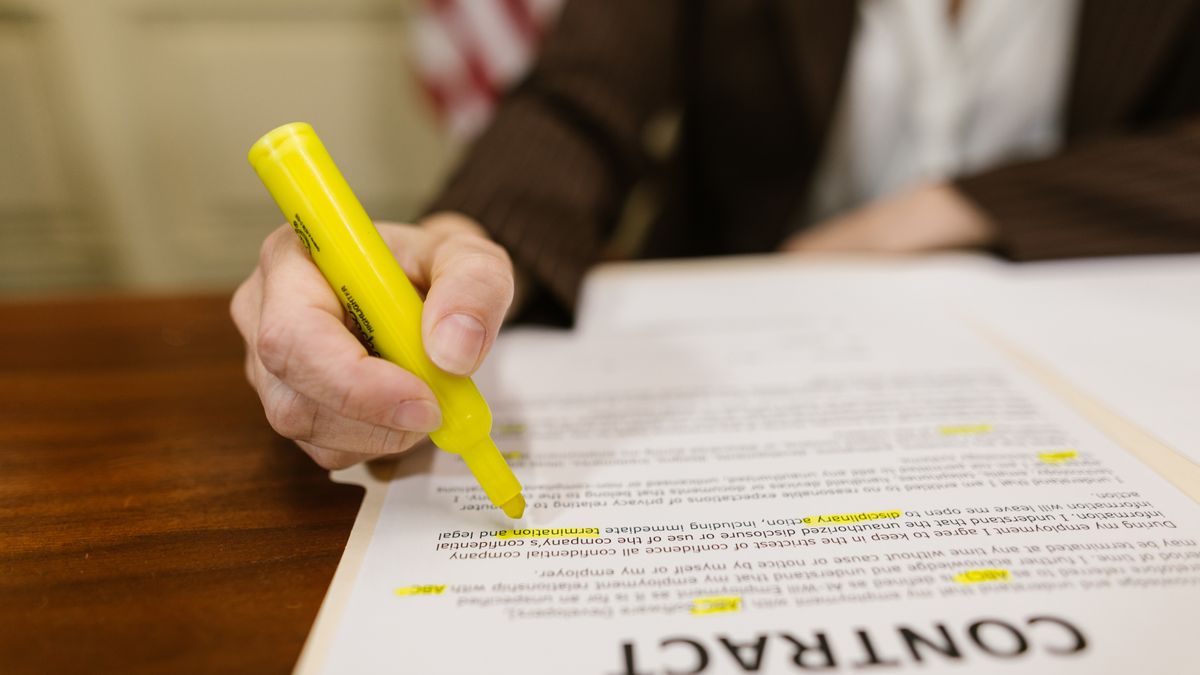
Arrange how the inventory is returned at the end. Agree on a final inspection in which the condition is compared with the inventory list at the start, excluding normal wear and tear. Specify who compensates for missing or damaged items and at what value. The tenant is liable for damage caused by their own actions and must act as a good tenant (Articles 7:213 and 7:218 of the Dutch Civil Code), but you arrange the details of valuation and replacement yourself.
A brief real-life scenario: an entrepreneur rents the complete inventory of a gym. The contract includes an inventory list of 40 machines, the obligation to have the equipment inspected annually, comprehensive insurance in the name of the lessee, and a final inspection in which the condition of each piece of equipment is checked. At the end, the dispute regarding two damaged treadmills was quickly resolved thanks to the list with initial photos.
Common mistakes
- No or incomplete inventory list, making returns and damage difficult to prove.
- Unclear allocation of maintenance for expensive equipment, with outstanding bills.
- Term not aligned with the rent of the property.
- Insurance and risk not arranged for theft, fire, or damage.
- No final assessment agreed upon, so discussion regarding the condition upon return.
You can find more background in what is an inventory rental agreement and having an inventory rental agreement drawn up. Need a basic overview? Check out the inventory rental agreementpage.
Honest recommendation

For a small set of inexpensive business assets, you can easily draft an inventory lease agreement yourself, provided you create a clear inventory list detailing the condition at the start and specify the price, duration, and return terms. However, do consult a lawyer for a complete, valuable setup, in cases where the lease overlaps with the tenancy of the premises, or in cases of complex liability. It is precisely the inventory list, the division of maintenance, and the return arrangement that determine whether you can part ways without dispute at the end.
Frequently Asked Questions
At a minimum: a specified inventory list detailing the condition of each asset, the rental price and payment term, the duration with notice period, the distribution of maintenance and insurance responsibilities, and an arrangement for return with final inspection.
List each asset with make, type, serial number (if applicable), and condition at the start, and add photos. Refer to the list in the contract so that it forms part of the agreement. The list is decisive upon return.
The landlord remedies defects and performs major maintenance (Article 7:206 of the Dutch Civil Code), while the tenant pays for minor, daily repairs (Article 7:217 of the Dutch Civil Code). For expensive equipment, you must explicitly specify the precise division of responsibilities and the insurance.
Yes, if you rent the inventory along with a property. Align the lease terms and notice periods so that you are not left with inventory in a property you have to vacate, or keep the property without inventory.
Agree on a final inspection in which the condition is compared with the initial inventory list, excluding normal wear and tear. Specify who will compensate for missing or damaged items and at what value.
That is up to you to determine. For expensive equipment, parties often agree that the lessee takes out insurance covering damage, theft, and fire. Specify who bears the risk if the inventory is damaged or disappears.
Include a default clause: a formal notice, contractual interest, and the authority to terminate the lease and reclaim the inventory following default. Without such a clause, you fall back on general statutory rules.


