

MKB Juristen drafts custom legal documents
It is best not to cobble together or copy important contracts, terms and conditions, and other legal documents yourself. We help entrepreneurs on a budget with customized legal solutions, clear costs upfront, and practical explanations.
- Custom contracts, terms and conditions, and legal documents
- Budget-friendly and clear about the costs upfront
- Request a free consultation or a no-obligation quote
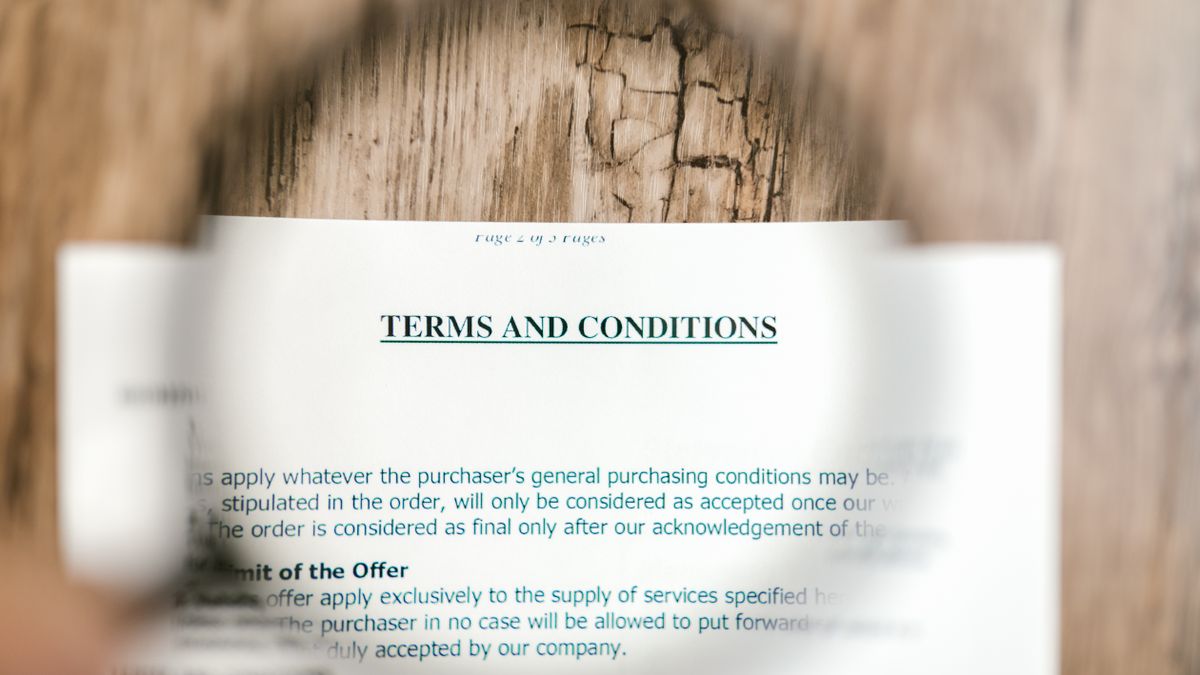
Drafting general terms and conditions for a retail store involves defining, by topic, what applies in your physical store: exchange and return policy, warranty and conformity, deposits on orders, prices and pricing errors, and payment. The art lies in distinguishing between what the law mandatorily regulates (which you do not rewrite or contradict) and what you are free to define yourself (where you make clear choices). Below are the components that belong in a store's terms and conditions, along with the pitfalls that lead to mistakes made with consumers.
The short answer
- Applicability: to which purchase agreements do the conditions apply and how do you make them known.
- Exchanges and returns: your own policy, as there is no statutory right of return in the store.
- Warranty and conformity: the legal basis plus any additional warranty.
- Down payments: amount, refund, and cancellation for orders and custom work.
- Prices and pricing errors: which price applies and what to do in the event of an obvious error.
- Payment and delivery: payment moment, payment methods and delivery.
Drafting general terms and conditions for a retail store: start with the law

Before you write anything down, one thing must be clear: when selling to consumers, a great deal of mandatory law applies. You cannot exclude or limit the customer's statutory rights. Clauses that attempt to do so are often on the “black” or “grey” list and can be invalidated by the customer — in which case you fall back on the law and your terms and conditions are of no use.
Good terms and conditions therefore primarily regulate the leeway left open by law. For a store, that leeway lies in the return policy, down payments, pricing errors, and practical payment and delivery arrangements.
Applicability and knowability
Start by considering to which agreements the terms apply and how you make them known to the customer. In a physical store, you do this by displaying them visibly at the checkout, stating them on the receipt, and posting them on your website. The customer must reasonably be able to know them before or at the time of concluding the purchase — otherwise, it is difficult to object to them.
Exchanges and returns: your own policy

This is the most important aspect for a store, as the law does not regulate this. There is no statutory right of return for in-store purchases; the 14-day right of withdrawal applies only to distance selling. Therefore, you choose what you offer yourself. Document at least:
- Whether you allow exchanges or returns, and within what timeframe.
- Under what conditions: unused, unworn, with receipt, in original packaging.
- What the customer receives in return: a refund, an exchange, or a voucher.
- Exceptions: for example, discounted items, hygiene-sensitive products, or custom-made items.
Please note: this concerns returns because the customer no longer wants the product. If the product is broken or not as promised, statutory conformity rights apply — these are separate from this.
Warranty and conformity
Do not confuse these two. Conformity is the customer's legal right to a sound product that does what they may reasonably expect of it. This applies always, regardless of what you write down. In your terms and conditions, you confirm this right and regulate how the customer reports a complaint and how you handle repair or replacement.
A warranty is something extra, on top of the law: a proprietary or manufacturer's warranty. If you provide one, clearly define what it covers, how long it lasts, and what the customer must do to invoke it. Important: a warranty may never restrict statutory rights of conformity.
Down payments, prices and payment
- Down payments. If you work with orders or custom work, specify the amount of the down payment and what happens in the event of cancellation. A clause stating that the entire down payment is automatically forfeited can be unreasonably burdensome for a consumer; link it to the actual costs incurred.
- Prices and pricing errors. Establish the applicable price and state that you are not bound by an obvious pricing error on the shelf or at the checkout that is recognizable to the customer.
- Payment. Payment time (at the checkout, upon delivery, at the time of ordering), accepted payment methods and consequences of non-payment of an order.
- Delivery. For ordered items: delivery period, what happens in case of delay, and the moment at which the risk passes.
Pitfalls for consumers
- Excluding warranty or conformity. Void — the customer retains his statutory rights.
- “No money back” as an absolute rule. Allowed for voluntary returns, but not if the product is defective.
- Waive the down payment entirely. Easily becomes an unreasonable burden; link it to actual costs.
- Terms and conditions not findable. You cannot object to undiscernible terms and conditions.
- Copying webshop texts. These contain a right of withdrawal that does not apply in the store and cause confusion.
Brief example: a furniture store sold a sofa made to order with a 30% down payment. The terms and conditions stated only “down payment is non-refundable”. When the customer cancelled a day later, before the order had been placed with the supplier, there were no costs whatsoever — the clause was difficult to enforce there. Linking it to actual costs would have prevented the problem.
Honest recommendation

If you have a regular store with ready-made products and direct payment at the checkout, you can often draft the terms and conditions yourself using a reliable template that aligns with consumer law. Fill in your own choices regarding returns, warranty, and pricing errors, make the terms easy to find, and you are largely done. A lawyer is not strictly necessary in that case.
Do seek professional help if you work with down payments on orders, custom work, expensive products, or your own warranty scheme — this is precisely where negotiating with consumers goes wrong. Read more: general terms and conditions retail store, what are general terms and conditions retail store , and having general terms and conditions drafted.
Frequently Asked Questions
At a minimum: applicability and knowability, exchange and return policy, warranty and conformity, down payments on orders, prices and pricing errors, and payment and delivery. Above all, regulate the scope left open by law; you do not overwrite or contradict mandatory consumer law.
Legally, this is not required: there is no right of withdrawal for purchases made in a physical store. You decide whether to allow exchanges or returns and under what conditions. Clearly document this choice so that customers know what to expect in advance.
In a physical store, that right does not exist, so you do not need to include it. Therefore, do not copy webshop terms and conditions, as these do contain a right of withdrawal that does not apply in the store and creates confusion. If you also sell online, create a separate policy for distance selling.
First, confirm the statutory right to conformity; this cannot be excluded. Additionally, consider offering your own or manufacturer's warranty as an extra, with a clear duration and conditions. Ensure that this warranty never restricts the customer's statutory rights.
Regulate the amount of the deposit and what happens in the event of cancellation. Link the withholding to the actual costs incurred instead of waiving the deposit entirely by default; the latter can be unreasonably burdensome for consumers. This is particularly relevant for orders and custom work.
Include a clause stating that you are not bound by an obvious pricing error on the shelf or at the checkout that is recognizable to the customer. This strengthens your position if an incorrect price is listed. Whether an error is “obvious” depends on the circumstances.
The customer must be reasonably able to know the terms and conditions before or at the time of concluding the purchase. Display them visibly at the checkout, state them on the receipt, and publish them on your website. It is difficult to hold unknowable terms and conditions against the customer.


