

MKB Juristen drafts custom legal documents
It is best not to cobble together or copy important contracts, terms and conditions, and other legal documents yourself. We help entrepreneurs on a budget with customized legal solutions, clear costs upfront, and practical explanations.
- Custom contracts, terms and conditions, and legal documents
- Budget-friendly and clear about the costs upfront
- Request a free consultation or a no-obligation quote
A BV (Besloten Vennootschap) is a Dutch legal entity with shares, in which the liability of the shareholders is in principle limited to the contributed capital. Loosely translated: the BV is a separate “legal person” that separates debts, property, and liability from your private situation. That is why it is the logical step for many entrepreneurs as soon as risks or profits exceed a certain point.
Anouk worked for four years as an independent marketing consultant, operating as a sole proprietorship, one client at a time. When she made the move to a team of three and secured larger contracts of €80,000, the advice came from her accountant and legal counsel: now is the time to set up a BV. Covering liability, managing excess profits more smartly from a tax perspective, and being ready for future investors. In this article: exactly what a BV is, when it is suitable, what it costs, and what is involved.
The short answer: what is a BV?
A Private Limited Company is a legal entity with capital divided into shares, regulated by Book 2 of the Dutch Civil Code. It has its own identity (Chamber of Commerce number, VAT number), equity, and its own liability — and is a separate entity for corporate income tax purposes. The shares are usually registered and not freely transferable; that is why it is called a “private” company.
Three characteristics that distinguish it from a sole proprietorship or general partnership:
- Limited liability. In principle, the BV is liable for its debts, not you personally. Subject to directors' liability (see below) or personal guarantee.
- Independent legal personality. The BV can enter into contracts, own property, and litigate in its own name. You, as a director, represent it.
- Separate fiscal entity. Corporate income tax on profit, income tax in Box 2 (substantial interest) on what you distribute as a director-major shareholder via dividends.
When is a private limited company (BV) a sensible choice?

Rules of thumb — not the law, but what works in practice:
- With profits exceeding approximately €120,000 per year, a BV generally becomes more tax-efficient than a sole proprietorship. This is due to the corporate tax rate plus the option to leave funds "imprisoned" within the BV.
- In cases of heightened liability risks. Major products, consultancy involving large claims, real estate, manufacturing. Limited liability can be of great value in such situations.
- With multiple entrepreneurs, shares are a much more convenient instrument for co-ownership than a general partnership structure — especially with future investors on board.
- For investment or exit purposes. Investors want shares, not a sole proprietorship. For a later sale, a BV structure is virtually a requirement.
For an informed choice: the logical next step if you have multiple founders is outlined in what is a shareholders' agreement
When exactly is a BV not allowed?
Three scenarios in which a BV is primarily an expensive overdrive:
- Low profit and low risk. Below approximately €70,000 in profit, the sole proprietorship is more tax-efficient due to the self-employment deduction and SME profit exemption. With low liability risk, this outweighs the benefits of a BV (private limited company).
- Starting situation with no prospect of growth. The incorporation and maintenance costs of a BV (annual accounts, corporate income tax return, payroll administration) add up; for a part-time individual, a sole proprietorship works just fine.
- Offloading a lot of administrative overhead. A BV requires more discipline: bookkeeping, board resolutions, Chamber of Commerce notifications. If you don't feel like dealing with that (and don't have an accountant to take care of it), it is harder than you think.
The players in a BV: shareholder, director, managing director
Three roles that people often confuse:
- Shareholder — the person who holds shares in the BV. Has voting rights at the general meeting, the right to dividends, owner's interest.
- Director — the person who manages and represents the BV on a day-to-day basis. Not automatically also a shareholder.
- DGA (Director-Major Shareholder) — someone who fulfills both roles: director and holds a substantial interest in the shares (at least 5%). A separate tax category with its own rules.
In a typical one-person BV, the founder is both a shareholder and a director, and is therefore a managing director. With multiple founders, the roles are often mixed—it is advisable to stipulate this in a shareholders' agreement beforehand.
Directors' liability: the exception
“Limited liability” is not an impenetrable cocoon. A director can be held personally liable for improper management, bankruptcy fraud, failure to report insolvency to the tax authorities in a timely manner, or in the case of personal guarantees. Read also when directors’ liability is at stake.
Practical advice: if you do your work properly, keep your records in order, and do not sign personal guarantees, private damage is rare. Be careful with personal guarantees from banks or suppliers — these undermine the BV protection regarding that specific contract.
How do you set up a BV?
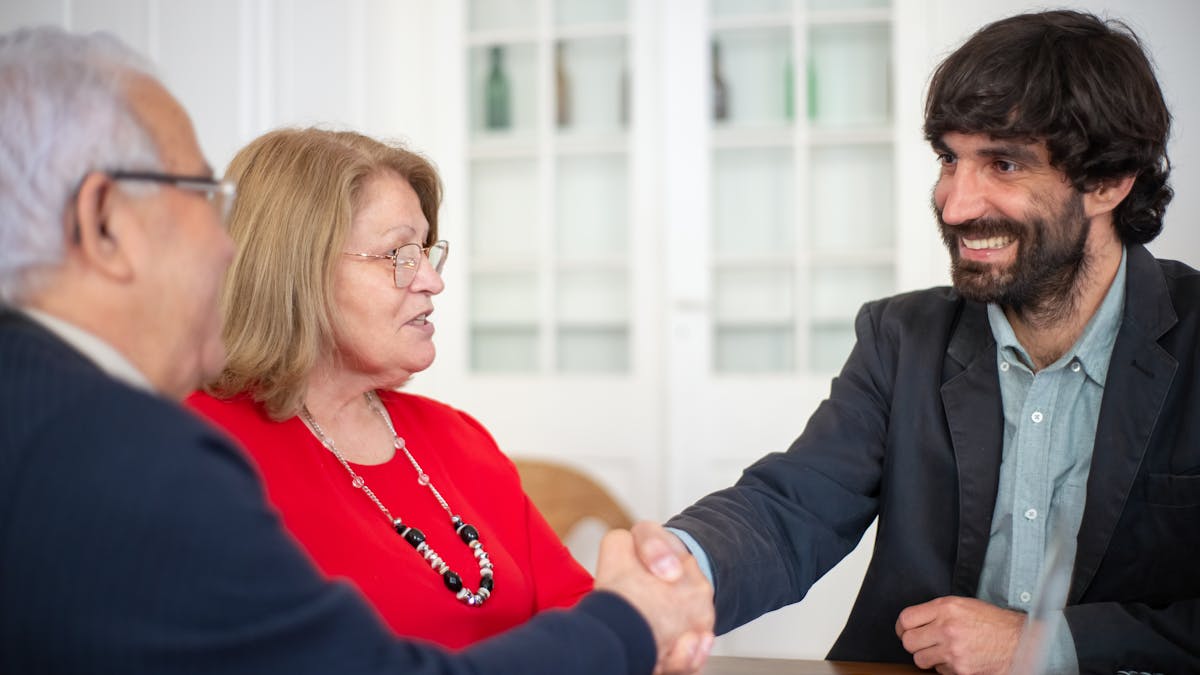
Broadly speaking, four steps:
- Preparation. Choose a name, description of purpose, capital structure, potential holding structure, identify founders.
- Notarial deed. A notary draws up the deed of incorporation with the articles of association. The BV comes into existence at the moment of execution.
- Chamber of Commerce registration. The notary often arranges the registration with the Chamber of Commerce immediately; with this, the BV also exists vis-à-vis third parties.
- Next steps. Apply for a VAT number, open a business bank account, make initial board resolutions, optionally conclude a shareholders' agreement, and arrange employment or management contracts.
You can find the complete step-by-step plan with deadlines in Setting up a BV in 2026: step-by-step plan. For the costs: Setting up a BV costs.
The associated legal infrastructure
A BV is not an end station, but a starting point. Documents you will want to arrange almost immediately:
- A shareholders' agreement for multiple shareholders.
- A management agreement between you (in your private capacity or via a holding company) and the BV.
- Good general terms and conditions for your commercial relationships.
- A holding structure (often via two BVs: a personal holding company above the operating company) — for separating assets and operational risks.
Honest recommendation
A BV is not a status symbol and not an automatic upgrade from a sole proprietorship. It is a legal form with advantages and disadvantages. Calculate the tax implications in advance with an accountant, weigh the liability risk in your industry, and discuss with a lawyer which legal infrastructure (holding company, shareholders' agreement, management agreement) is appropriate. Do this beforehand, not afterwards.
Do you want to know the concrete process of incorporation? Start with Incorporating a BV in 2026: step-by-step plan. For the legal infrastructure after incorporation: the shareholders' agreement and general terms and conditions.
Frequently Asked Questions
A BV (Besloten Vennootschap) is a Dutch legal entity with capital divided into shares, in which the liability of shareholders is in principle limited to what they have contributed. It has its own rights and obligations, its own Chamber of Commerce number, and is a separate entity for corporate income tax purposes.
Generally, this applies with profits exceeding approximately €120,000 per year, in cases of increased liability risk, when multiple entrepreneurs work together, or when there are plans for investors and an exit. Below that threshold, a sole proprietorship is usually more tax-efficient due to the self-employment deduction and the SME profit exemption.
A BV is a legal entity with its own liability and tax obligation (corporate income tax). A sole proprietorship is not a separate legal entity: the entrepreneur is fully personally liable and pays income tax. The BV offers more protection but requires more administration.
No. In cases of improper management, bankruptcy fraud, failure to report insolvency to the tax authorities in a timely manner, or personal guarantees, a director can be held personally liable. Be especially careful with personal guarantees — they override the BV protection regarding that contract.
A director-major shareholder: someone who is both a director of a BV and holds a substantial interest in the shares (at least 5%). From a tax perspective, specific rules apply to director-major shareholders regarding customary salary, dividends, and loans from the BV.
Since the Flex-BV Act (2012), there is no longer a minimum capital requirement. A BV can be incorporated with €0.01 in share capital. Incorporation costs (notary, Chamber of Commerce) range from a few hundred to a thousand euros, depending on complexity.
This is highly recommended when there is more than one shareholder. The articles of association regulate the basis; the shareholders' agreement governs the agreements between shareholders (departure, dividends, deadlock). Better to do this beforehand than during a conflict.




