

MKB Juristen drafts custom legal documents
It is best not to cobble together or copy important contracts, terms and conditions, and other legal documents yourself. We help entrepreneurs on a budget with customized legal solutions, clear costs upfront, and practical explanations.
- Custom contracts, terms and conditions, and legal documents
- Budget-friendly and clear about the costs upfront
- Request a free consultation or a no-obligation quote
The biggest pitfalls in freelance agreements for self-employed professionals are: bogus self-employment under the DBA Act, a forgotten or unclear intellectual property transfer, unlimited liability, a missing termination clause, and a rate without VAT or payment agreements. These mistakes only cost you money when things go wrong — in the event of a tax assessment, an intellectual property dispute, or a damage claim. Below are the most important pitfalls and how to avoid them before you sign.
The short answer
- Sham self-employment: contract states self-employed, practice states employment — risk of back tax assessment.
- IP forgotten: without transfer, the copyright remains with the freelancer.
- Unlimited liability: no limit means full damages.
- No termination clause: uncertainty regarding notice period and settlement.
- Sloppy rate: no VAT indication, payment term, or additional work arrangement.
Freelance agreement for self-employed professionals: most common pitfalls
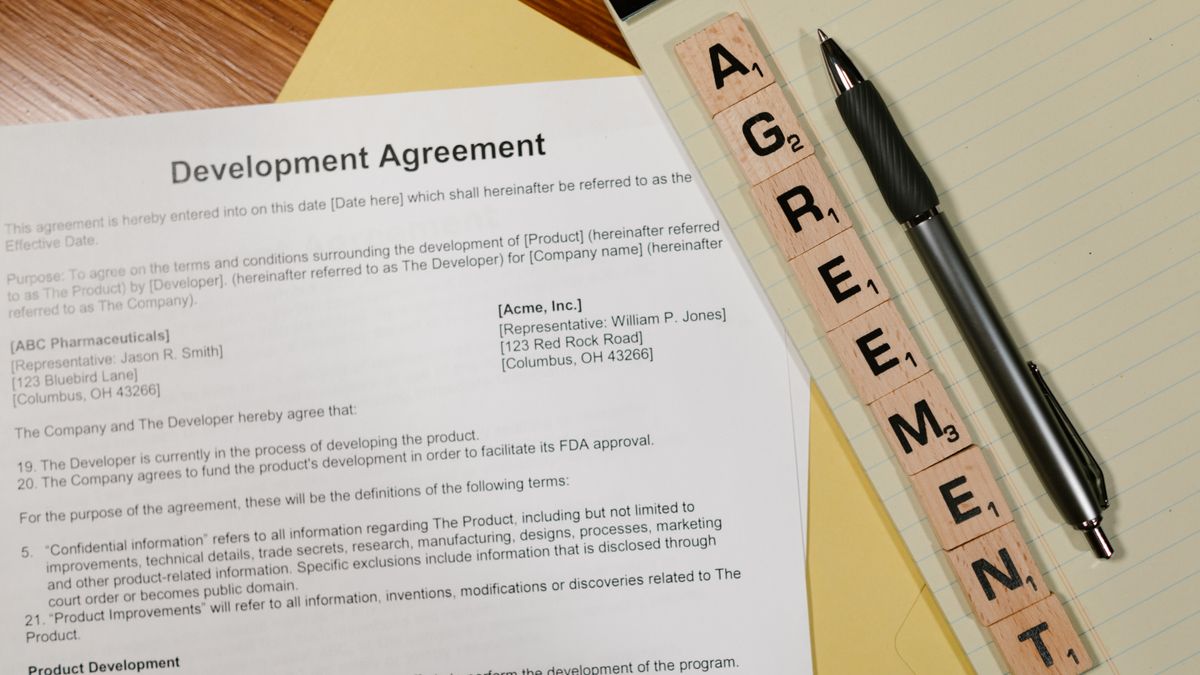
Most mistakes lie not in what is stated incorrectly, but in what is missing. A freelance agreement that only specifies the assignment and the rate leaves the allocation of risk unregulated. And it is precisely those risks—IP, liability, classification of the relationship—that determine what the contract yields you if a dispute arises.
A second pattern: parties copy a contract that does not fit the situation. Using a template for a design job for a long-term IT secondment almost guaranteed leads to problems, particularly regarding bogus self-employment.
Pitfall 1: bogus self-employment under the DBA Act

The biggest pitfall. Since January 1, 2025, the Tax and Customs Administration has once again been actively enforcing the rules against bogus self-employment. If it turns out that the freelancer is in fact an employee — under authority, structurally embedded, without genuine entrepreneurial risk — the client may be required to levy additional payroll taxes and social security contributions. That risk often lies with the client, but it affects both parties.
The mistake: thinking that a clause stating "the contractor is independent" is sufficient. It is not. Actual execution outweighs the text. Avoid this pitfall by ensuring the practice holds true: no fixed working hours imposed, substitution possible, multiple clients, own equipment, and risk.
Pitfall 2: intellectual property not arranged
Without an explicit agreement, the copyright remains with the freelancer — even if the client has paid. Many clients believe that payment automatically confers ownership. That is not the case. For text, designs, software, and images, this is a costly mistake.
- Error: no intellectual property provision, or only “rights transfer” without a deed.
- Consequence: the client does not acquire ownership, and the freelancer can object later.
- Solution: express transfer via deed, or a clear license linked to payment.
Pitfall 3: liability not limited

Without a liability clause, a freelancer can be held liable for the full amount of damages, including consequential damages that far exceed the invoice amount. A common mistake on the part of freelancers is signing a contract with the client in which liability is unlimited.
Prevent this with a limit (invoice amount or fixed maximum) and the exclusion of indirect damages. Beware of the mirror error: a clause that excludes all liability, even in cases of intent or conscious recklessness, is untenable — the judge can set it aside.
Practical example: a self-employed consultant signs an agreement without a liability limit. After advice that turns out badly, the client claims the full project costs plus lost revenue. With a limitation clause, the damages would have been limited to the fee.
Pitfalls 4 and 5: cancellation and rate handled sloppily
Two pitfalls that are less spectacular, but often lead to friction:
- No termination policy: lack of clarity regarding the notice period and what happens to hours worked and outstanding invoices upon termination. For long-term assignments, the freelancer may suddenly find themselves without work.
- Careless rate: no mention of “excluding VAT”, no payment term, no arrangement for additional work. This leads to invoicing disputes and late payments.
Both can easily be prevented with a few concrete sentences: a reasonable notice period, a clear rate excluding VAT, a payment term, and an agreement regarding additional work and late payment.
Honest recommendation

For a small, one-off job of low value with a clear scope, you can avoid the pitfalls yourself with a good template — a lawyer is not necessary in this case, provided IP, liability, and rates are correct. However, do have a contract reviewed as soon as substantial money, valuable intellectual property, or a risk of bogus self-employment is involved. If a contract is presented to you by the client, do not sign it blindly: have the liability and IP provisions checked in particular.
Read more: see what a freelance agreement for self-employed professionals is and how to draft one correctly, or use a freelance agreement for self-employed professionals.
Frequently Asked Questions
Bogus self-employment under the DBA Act. If it turns out that the freelancer is in fact an employee, the client may levy additional payroll taxes. A clause stating "the contractor is independent" is not sufficient; the actual performance outweighs the text.
In that case, the copyright remains with the freelancer, even if the client has paid. Payment does not automatically confer ownership. For texts, designs, and software, this is an expensive mistake; arrange the transfer explicitly via a deed linked to payment.
Without a limit, a freelancer can be held liable for the full amount of damages, including consequential damages that far exceed the fee. Limit liability to the invoice amount or a maximum and exclude indirect damages.
No. A clause that also excludes liability for intent or conscious recklessness is untenable and can be set aside by the court. Include that exception, and the limitation remains intact.
This creates uncertainty regarding the notice period and the settlement of hours worked and outstanding invoices. In the case of long-term assignments, the freelancer may suddenly find themselves without work. A reasonable notice period and a settlement agreement prevent this.
Without the mention of “excluding VAT”, without a payment term, and without a provision for additional work, invoicing disputes and late payments arise. Concretely define the rate, VAT, payment term, additional work, and the consequences of late payment.
That is wise. A client contract is usually written in their favor, especially regarding liability and intellectual property. Do not sign blindly; have those provisions checked before you agree.


